
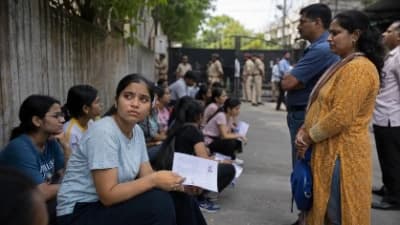
The Indian government has temporarily pulled the plug on Telegram, sparking an intense debate about cybersecurity, student anxiety, and digital freedom. Triggered by a desperate attempt to protect the integrity of the upcoming NEET-UG 2026 re-examination, the Ministry of Electronics and Information Technology (MeitY) restricted access to the app until June 22.
The ban, backed by recommendations from the National Testing Agency (NTA), comes in the wake of chaos surrounding the original May 3 exam, which was canceled due to widespread irregularities. With the re-test locked in for June 21, authorities are pulling out all the stops to prevent cheating networks from hijacking the process. Following the order, Google swiftly wiped Telegram from its Play Store, and Apple is expected to fall in line.
While the government clarified that no actual new question paper has been leaked, they are targeting a massive ecosystem of fear-mongering and scams. Crucial to this ban is a highly specific technical loophole on Telegram: its message-editing feature.
Unlike other platforms, Telegram allows channel administrators to heavily edit older posts—including swapping out attached PDFs—without visibly altering the original time stamp. Fraudsters have been exploiting this by inserting actual exam questions into days-old messages after the test concludes. They then share screenshots to claim they had the leaked paper well in advance, demanding massive sums of money from panicked students. To kill this illusion of time-traveling leaks, MeitY has also ordered Telegram to completely disable message editing in India until June 30.
Telegram’s founder and CEO, Pavel Durov, didn't hold back on social media. Slamming the temporary ban on X (formerly Twitter), Durov argued that punishing over 150 million innocent users in India is a blunt tool that fails to solve the root problem.
"The ban hasn't stopped anything. The leaks just moved to other apps," Durov pointed out. He maintained that Telegram is a "force for good," highlighting that the platform had already taken down hundreds of Indian channels running exam scams over the past few weeks.
The heavy-handed move has polarized experts and students alike. The Internet Freedom Foundation labeled the nationwide blackout a "band-aid solution" that is entirely disproportionate.
Tech researchers have also voiced heavy skepticism. Cybersecurity experts note that entirely blocking Telegram is a logistical nightmare since the app's architecture allows users to easily bypass restrictions using proxies. Critics are questioning the precedent this sets, asking why an entire communication network is being penalized for the bad actions of a few, and why platforms like WhatsApp aren't facing similar scrutiny.
However, defenders of the ban argue that the psychological stress placed on millions of young students by fake leak claims is a public emergency. For now, the government is treating the digital blackout as a last resort to buy enough quiet for the re-examination to take place without an administrative collapse.