
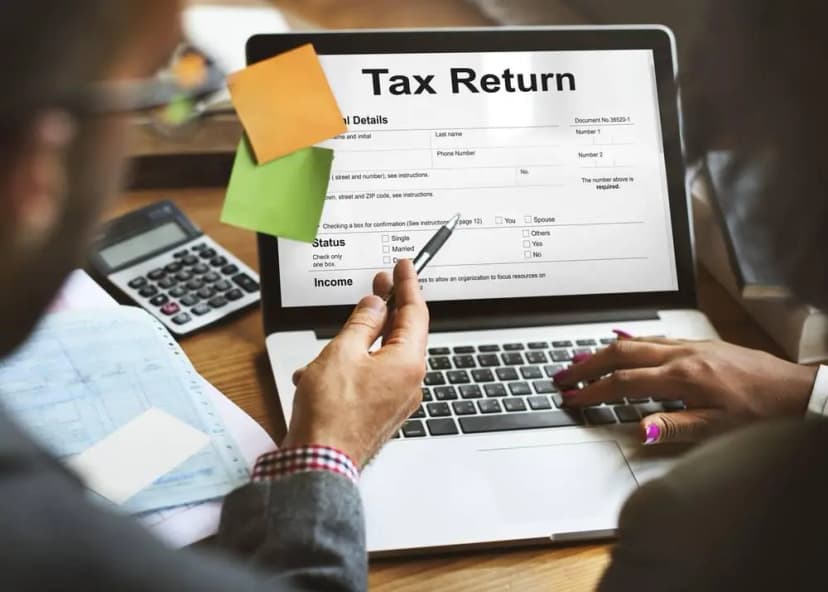
For millions of us, tax filing season follows a very familiar pattern.
Someone in the family WhatsApp group asks, "ITR bhar diya kya?" A colleague shares a screenshot of their refund on Slack. Everyone starts debating old vs new tax regimes, deductions, and deadlines. And suddenly, a task you ignored for months becomes an emergency.
That is exactly when mistakes happen.
It’s not because tax rules are impossible to understand. It’s just because we are in a hurry. We trust the pre-filled data on the portal, click through a few screens, hit submit, and assume everything is fine.
But with the Income Tax Department leaning heavily on data analytics, automated mismatch notices are on the rise. Before you rush to file your Income Tax Return (ITR) for FY 2025-26 (Assessment Year 2026-27), take 15 minutes to check these crucial things.
Many taxpayers believe that if information appears automatically in the portal, it must be 100% accurate. That is a huge misconception.
Banks, employers, mutual fund houses, and brokers continuously upload transaction data. Occasionally, entries get delayed, missed altogether, or reported under the wrong category. Think of the pre-filled return as a helpful rough draft, not the final version.
Employers and financial institutions have until June 15 to issue Form 16 and upload TDS returns. Rushing to file your taxes before your AIS (Annual Information Statement) and Form 26AS are completely updated is a guaranteed way to trigger an automated tax notice. Give the system time to sync up, then cross-verify the portal's data with your actual bank statements and salary slips.
If you are a salaried employee, Form 16 is your go-to document. But the tax department tracks multiple other cash inflows that you might overlook:
- • Interest from your savings accounts
- • Interest from fixed deposits (FDs) and recurring deposits (RDs)
- • Income from freelance work or weekend consulting gigs
- • Dividends from shares held in your demat account
- • Rental income from a property
Individually, a few hundred rupees of interest might look small to you, but the tax department expects you to report it completely.
If you changed jobs mid-year, pay close attention. This is one of the single biggest reasons middle-class professionals get tax notices.
When you join a new company, your new HR department usually calculates your TDS from scratch. They don't automatically factor in what your previous employer paid you. As a result, both employers might apply the standard deduction and initial lower tax slabs twice.
When you file, your total income combines, and you suddenly realize you owe a significant chunk of self-assessment tax. To avoid this, gather Form 16 from both employers and manually aggregate your total salary details.
With mutual fund SIPs and stock trading completely mainstream now, millions of us are casual investors. But selling or restructuring investments comes with serious tax implications.
If you redeemed mutual fund units to pay for an emergency, shifted money from one fund house to another, or sold a few shares, you have a taxable capital gains event.
Even if your total long-term capital gains fall under the tax-free limit, the transaction itself must be disclosed.
Log into your apps (like Groww, Zerodha, or CAMS) and download your Capital Gains Tax Report for the financial year before filling your forms.
The New Tax Regime has officially been updated with friendlier slabs for FY 2025-26, making it the default choice. However, it completely eliminates almost all deductions.
| New Tax Regime Slabs (Default) | Tax Rate | Old Tax Regime Slabs (Optional) | Tax Rate | |
| Up to ₹4,00,000 | NIL | Up to ₹2,50,000 | NIL | |
| ₹4,00,001 to ₹8,00,000 | 5% | ₹2,50,001 to ₹5,00,000 | 5% | |
| ₹8,00,001 to ₹12,00,000 | 10% | ₹5,00,001 to ₹10,00,000 | 20% | |
| ₹12,00,001 to ₹16,00,000 | 15% | Above ₹10,00,000 | 30% |
Note: Under the New Regime, a Standard Deduction of ₹75,000 applies, and Section 87A rebate covers taxable income up to ₹12 Lakhs (making tax effectively zero up to that limit).
Which should you pick? Do the math. If you are aggressively using Section 80C (PPF, ELSS, school fees), Section 80D (health insurance), and claiming Home Loan Interest benefits, the Old Regime might still save you thousands of rupees. Use the portal's comparison tool to see which option leaves more money in your bank account.
Filing on the wrong form can cause your return to be treated as defective. Thankfully, rules have eased up slightly this year:
- • ITR-1 (Sahaj): Can be used by salaried individuals with an income up to ₹50 Lakhs. Crucially, you can now use it if you have long-term capital gains (under Section 112A) up to ₹1,25,000 or income from up to two house properties (previously restricted to one).
- • ITR-2: Use this if your capital gains exceed those limits or if you have broader investment profiles.
- • ITR-3: Mandatory if you earned any income from a business, profession, freelance consulting, or intra-day/FnO trading.
- •
Imagine doing all the hard work, only for your refund to get stuck in limbo. This usually happens for two incredibly simple reasons:
- • Unvalidated Bank Accounts: Ensure the bank account you selected for your refund is pre-validated on the e-filing portal and that your PAN is linked to it. Double-check the IFSC code, especially if your bank was recently merged.
- • Forgetting to e-Verify: Filing your ITR is only 90% of the job. Your ITR is legally invalid until you verify it. You have a strict window to e-verify via Aadhaar OTP after submitting. Don't close your browser until you see that green checkmark.