
There is a distinct, electric tension that fills New York’s Times Square just before a defining market opening. But on this particular Friday morning, the air outside the Nasdaq exchange feels heavier, thick with anticipation. History is about to be rewritten on the trading floor, and at the center of it all is a single, polarizing figure who has spent his entire life betting against the odds.
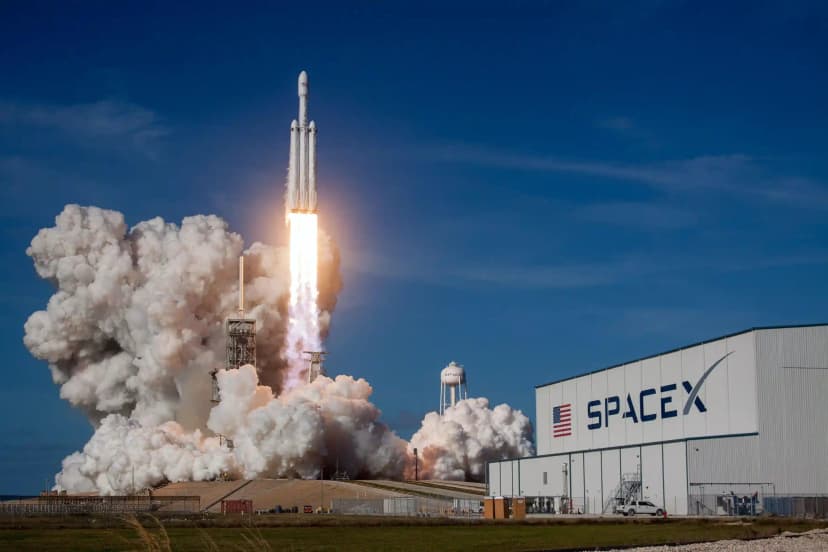
Elon Musk’s SpaceX is officially going public.
It is the largest initial public offering (IPO) in human history, a staggering financial event that values the rocket company at just under $1.8 trillion. To put that into perspective, this single entity is now worth more than the corporate empires of Walmart, Meta, or even Musk’s own groundbreaking electric car company, Tesla. By pricing 555 million shares at $135 each, SpaceX has comfortably shattered the previous world record held by Saudi Aramco’s $29.4 billion debut in 2019, pulling in a jaw-dropping $75 billion in a single day.
Yet, beneath the cold, hard numbers lies a deeply human story of ambition, high-stakes risk, and the sheer force of will.
For the thousands of current and former SpaceX employees who spent the last quarter-century working grueling hours, watching rockets explode on Pacific atolls, and sacrificing weekends to chase a collective dream of reaching the stars, Friday morning brings life-altering wealth. The IPO is set to mint thousands of new millionaires and an entirely new tier of billionaires. For them, the ticker symbol "SPCX" flashing on the board is the ultimate validation of a 24-year journey that began in a modest warehouse in 2002.
But for the man leading the charge, the stakes are profoundly personal, and astronomically higher.
If Wall Street embraces the debut as expected, the financial surge could propel Musk to a status no human being has ever achieved: the world's very first trillionaire. Entering the week with a net worth already hovering at a staggering $782 billion—nearly three times that of Google co-founder Larry Page, Musk stands on the precipice of an unimaginable financial frontier.
True to form, Musk hasn’t just brought his rockets to the public market; he has brought his entire universe. Earlier this year, in a classic, high-wire move that gave Wall Street analysts whiplash, he folded his artificial intelligence venture, xAI, and his social media network, X (formerly Twitter), directly into SpaceX. It was a massive gamble, tying the volatile worlds of social media and bleeding-edge AI to the fortunes of a space exploration company.
That blend of genius and unpredictability is precisely what has divided the world looking on.
For the legions of everyday retail investors—who were uniquely allocated a massive 20% of the total shares—this IPO is a golden ticket to join a modern-day sci-fi crusade. They aren’t just buying equity; they are buying into Musk’s dream of putting humans on Mars and spinning a web of data centers across the cosmos.
On the other side of the ledger, institutional traditionalists on Wall Street are holding their breath. Some point to the sobering reality of the company’s current books: despite bringing in $18.7 billion in revenue last year, SpaceX lost a net $4.9 billion. The company’s jaw-dropping regulatory claim that it can eventually generate $28.5 trillion in revenue rests entirely on technology that has yet to be proven.
Simultaneously, the sheer scale of the wealth being generated has sparked a profound moral unease. On the eve of the launch, critics and activists gathered outside the Nasdaq offices, raising a giant inflatable caricature of Musk in protest. The demonstration highlighted growing concerns over xAI's Grok chatbot, while human rights advocates voiced deeper anxieties about the societal impact of concentrated wealth.
"A trillion dollars in the hands of one man," warned Nabil Ahmed of Oxfam America, "is incompatible not only with an affordable economy, but also with a healthy democracy."
As the executives prepare to ring the opening bell, the SpaceX IPO stands as a testament to the chaotic, inspiring, and terrifying nature of human progress. It is a moment where science fiction officially becomes corporate reality.
Whether this historic day marks the beginning of a multi-planetary future or the ultimate inflation of a corporate bubble, one thing is certain: the world is watching, and humanity has never seen financial ambition on a scale quite like this.