
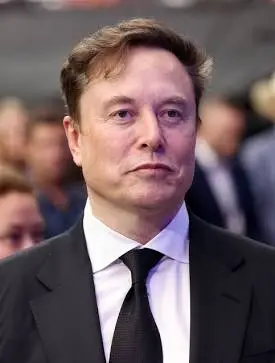
There is an old, lingering idea that the wealthiest among us build their empires slowly, block by block, over generations. We are used to the stories of quiet dynastic wealth, hidden behind heavy oak doors in London or New York. But what is happening right now under the banner of Elon Musk has completely broken that old mold.
It is not just that he is on the verge of becoming the planet’s very first trillionaire. It is the dizzying, almost terrifying speed at which it is happening Elon Musk: Standing at the edge of financial history.
A recent trajectory report from Informa Connect Academy has laid it bare: Musk’s net worth has been compounding at an average annual rate of 110%. If that momentum holds its current pace, he will cross the thirteen-figure threshold by 2027. To stand at the edge of such a milestone feels less like a traditional milestone in business history and more like a sudden, chaotic leap into a science fiction future we aren't entirely sure we are ready for.
To understand how a single human being scales these heights, you have to look at the massive engines running beneath his feet. This isn't wealth tied up in static real estate or traditional banking; it is wealth driven by existential bets on where humanity goes next.
- • Tesla’s Automotive Gravity: Even with market shifts and intense competition, Tesla remains a massive financial anchor, commanding a market value that dwarfs legacy automakers who have been building cars for a century.
- • The Starlink Skies: SpaceX has evolved from a daring aerospace startup into an absolute monopoly on low-Earth orbit. Every time a Falcon rocket goes up, it expands a global digital canopy that is fast becoming the backbone of global internet connectivity.
Yet, as the numbers spin faster on the calculators of Wall Street, the reaction across the rest of the world is deeply divided. For his legions of supporters, Musk is the ultimate archetype of human ingenuity—a flawed, hyper-focused builder who drags impossible ideas into reality simply because he can. They look at the 2027 projection and see a validation of the grandest human ambitions: electric grids, neural interfaces, and a path to the stars.
But outside the echo chambers of Silicon Valley, that massive number carries a very different kind of gravity. For historians, economists, and everyday families watching their grocery bills climb, the rise of a trillionaire sparks a profound sense of unease.
When a single individual commands more capital than the gross domestic product of entire sovereign nations, the balance of human power fundamentally shifts. It forces us to ask tough, uncomfortable questions about the world we are building. Can a global society remain stable when the resources to solve generational crises—from climate displacement to systemic poverty—are concentrated in the hands of one person?
Historical Wealth Milestones:
- John D. Rockefeller: First Billionaire (1916)
- Elon Musk: Projected First Trillionaire (2027)
Time Elapsed: ~111 Years
We are no longer just talking about extreme success; we are talking about a brand-new category of human influence.
As 2027 inches closer, the ledger remains wide open. This isn't just a story about a single man's bank account or the soaring valuation of his stock options. It is a mirror held up to our modern world—a vivid, striking picture of a time where human ambition has never been louder, the technology has never been faster, and the gap between the ground and the stars has never felt quite so vast.